
- Nails
- Staples
- Steel dowel pins (brace pins)
- End post fasteners and wire splicers
- End post fasteners
- In-line wire splitters
- Quik-splice
- Pressure treated "twitch" sticks
- Adjustable in-line wire strainers
- Removable wire strainer handles
- Tension spring indicator
- Ground rod clamps
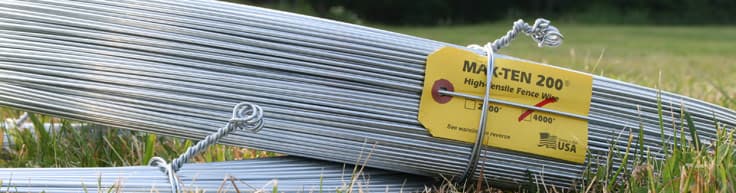
There are two important factors when selecting wire: first, the minimum ultimate tensile strength and second, the resistance to atmospheric corrosion. The wire must have enough tensile strength to withstand not only the increased tension pulled up at the time of installation but also the increased tension caused by livestock pressure and low-temperature contraction of the wire. Also, the resistance to atmospheric corrosion is important. MAX-TEN 200 High Tensile fence wire has a life expectancy up to 50 years.
- Fencing tool with sleeve crimper, wire cutter and staple puller
- One-man post hole digger and tamper OR tractor-mounted post driver
- Wire pay-out reel (Spinning Jenny)
- Chain-grab wire puller
- Wire cutters
- Drill and drill bits
- Wire dispenser/pay out mechanism
- Measuring wheel
Experienced fence builders have learned that the most suitable material for fence posts is wood - specifically round, chemically pressure-treated softwood, such Southern Pine. The need for strong posts, particularly on the end, corner and gate locations can not be overemphasized. Not only are pressure-treated posts strong, they are relatively straight and have a natural taper which facilitates driving. Round posts have no sharp edges to kink wires at corners or injure livestock. Pressure treated wood posts can offer up to 40 years of resistance to damage by weather, termites, soil bacteria, decay, soil or agricultural chemicals and even fire.